

You’ve just created your website. You have a fantastic and awesome design, a fantastic and awesome product, and you are ready to show the world. You wait, wait and wait for the traffic to come in, but after a week, there’s hardly any. As a business owner, you may have the burning question in your mind, how long does SEO take to show results?
There is no on/off button for optimizing a site for the search engines. It’s really a garden, of course. The first bloom will not be seen until the proper soil, watering, and some patience is needed.
There is no quick and easy way to the top of the SERPs here. If you’re looking to learn the roadmap to sustainable search visibility, then this guide will take you through the realistic SEO timeline for your website.
Why SEO Takes Time to Show Real Results
There is a lot of competition in the digital world. There are millions of websites that are bidding for the same keywords, so Google has to be very selective about the ones that it promotes.
The first thing you do when you begin an SEO campaign is you are creating trust with search engines. Google must be able to access your pages, comprehend your content and ensure you are a reliable source. That’s why you don’t see huge Google rankings overnight, as this is a “probation period.
Also, SEO is an ongoing process. Each technical improvement, good blog post, and backlink brings another level of credibility to your website. This takes time to build up but once it begins, it’s a strong motor for organic growth.
Key Factors That Influence SEO Results
All websites aren’t created equal. There are a number of SEO ranking factors that will make a difference between making progress in three months or 12 months:
- New Website: When you create a new website, it has no website authority.The longer a domain has been, the more opinions will have been formed about it. If it has a good reputation, then it will rank very fast for keywords.
- Competition: Standing in the way of competing for “shoes” rather than “hand-crafted leather boots in Mumbai” will be a lot more difficult. The longer the climb, the greater the competition.
- Content Quality: Google has a focus on “Helpful Content. Without articles that address a user’s problem, your content optimization efforts will come to a halt.
- Technical Health. Speed your website down or if your link’ broken search engines are going to penalize you. Technical SEO is the foundation for your whole campaign.
- Backlink Building: It is similar to digital word-of-mouth. The better the sites that link to you, the quicker you will be able to rank.
From Panda to AI Search: How SEO Evolved with Google’s Algorithm Updates
The ranking system of today is very different from what it was 10 years ago. When you look at the changes in Google’s algorithms, you can see that it’s becoming more and more user-centric.
Back in the day, it was possible to get away with “keyword stuffing.” Then the Panda and Penguin updates came along, which were against thin content and spammy links. Later, RankBrain added machine learning to Google to help it comprehend the intent of a search.
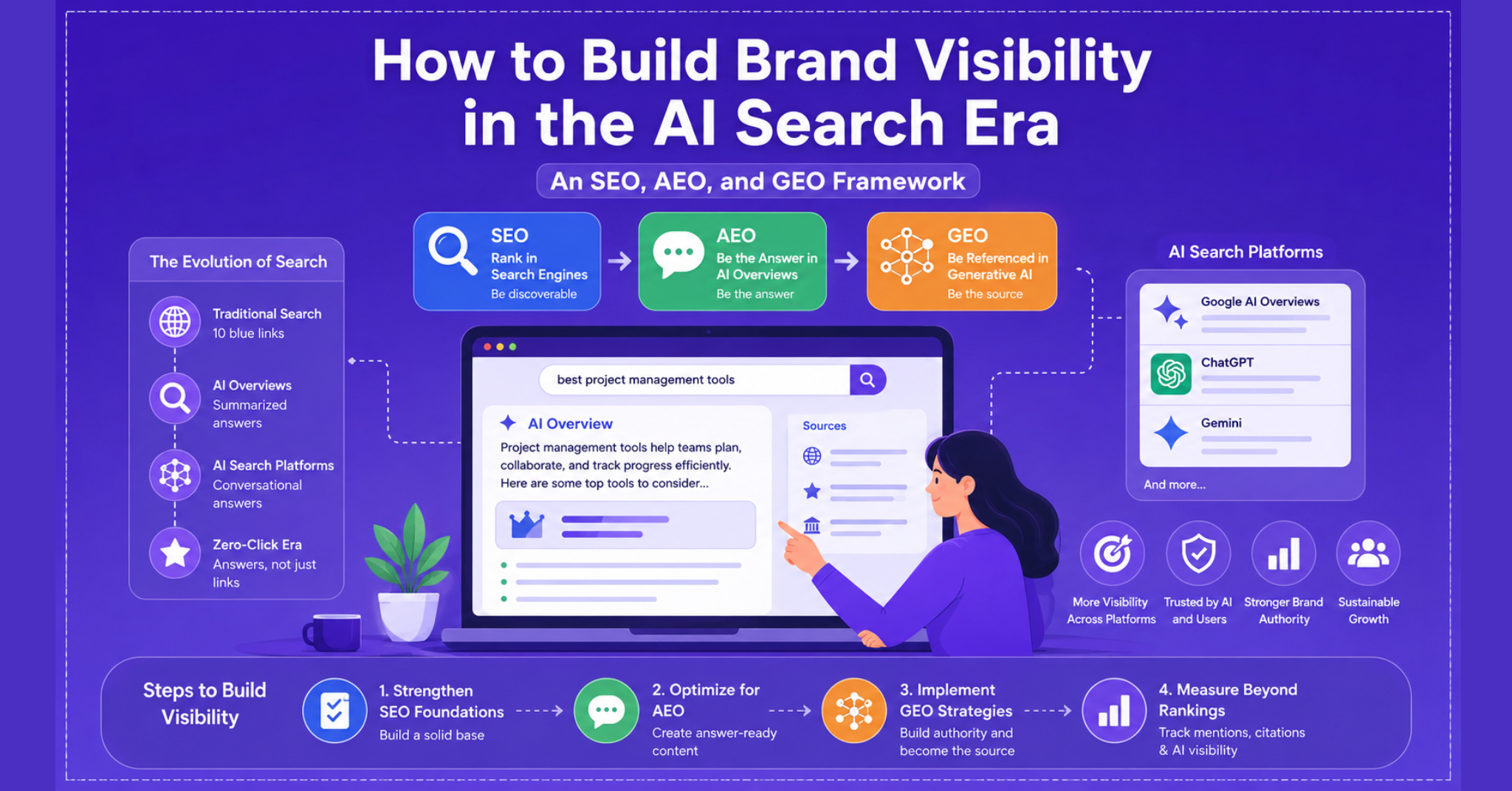
Nowadays, it’s search optimization using AI. More and more AI summaries are coming up and SEO is no longer simply about matching keywords but providing the most comprehensive, human-oriented response.
Keeping abreast of each of these developments is an ongoing challenge and for this reason, many organizations choose to work with an SEO agency in Mumbai who are experts in this domain.
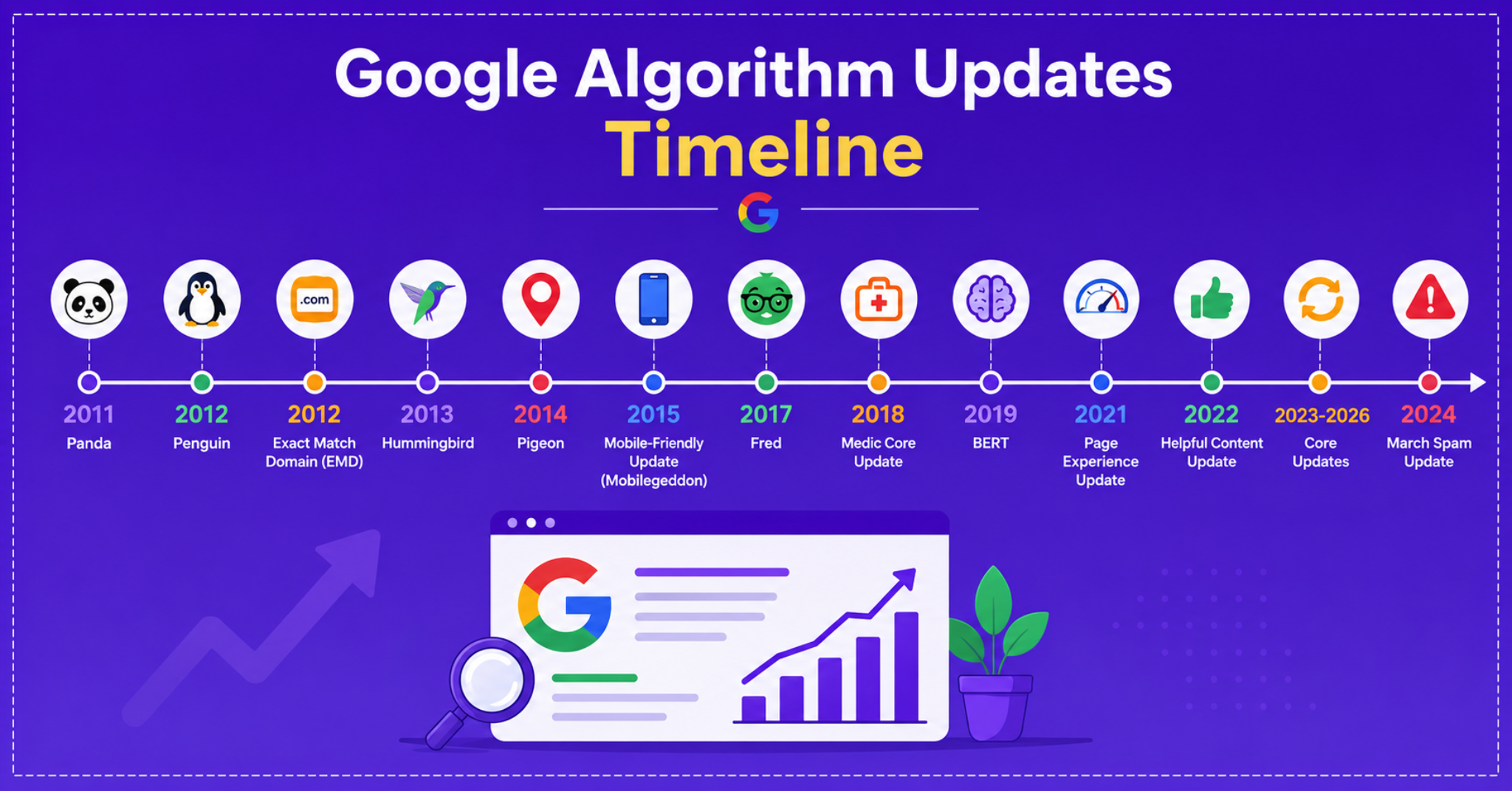
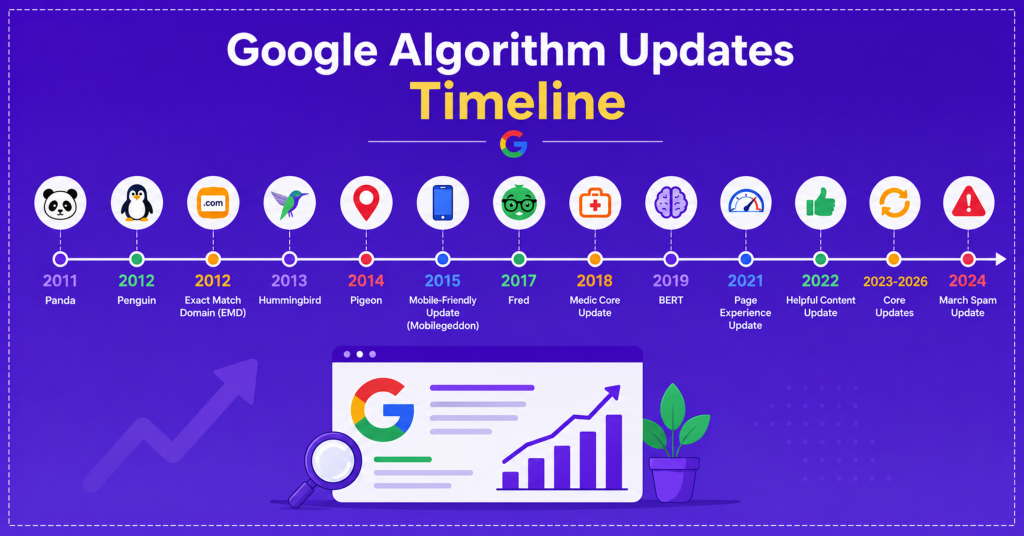
The Ultimate Google Algorithm Change Timeline: Key Updates That Reshaped SEO
To master your search engine optimization timeline, you must understand the history of major Google algorithm updates. Google modifies its ranking systems thousands of times a year, but several core updates completely revolutionized keyword optimization, backlink strategies, and organic traffic growth. Here is the definitive historical timeline of Google updates every website owner must know:
Google Panda (2011) – The Content Quality Revolution:
This update targeted thin, duplicate, plagiarized, and low-quality content. It penalized content farms and rewarded high-value, comprehensive articles, making people-first content a primary Google ranking factor.
Google Penguin (2012)
Penguin talked about practices such as keyword stuffing, spam building backlinks, among others, that are considered unnatural. It made it essential that brands focus on “inbound relevant links” that come from authors ranking in higher places.
Google Hummingbird (2013) – Core Semantic Search
A new generation engine emerges
Google’s innovative search engine has completely changed how queries are understood. Instead of focusing only on exact-match keywords, it relies on understanding the user’s intent or deriving the meaning of words from the various components of a search query.
Mobilegeddon (2015) The Mobile-First Shift
Mark your calendar for the Mobile-First Shift and get a sneak peek of Mobilegeddon 2015! The second version heralded the era where mobile-friendly sites would start getting rewarded, and non-mobile responsive sites would get penalized by search engines. It re-emphasized the importance of designing web pages (and/or mobile SERPs) with the mobile user in mind – to cater to the mobile searches.
Google RankBrain (2015) Machine Learning Integration
The latest feature is the machine learning component. The Google search engine is rumored to integrate machine learning b and is called RankBrain in the main Google algorithm. It enabled the search engine to comprehend the types of queries it can respond to effectively and then match search queries to the best-suited human seeking the search engine.
Google BERT (2019) Natural Language Processing
Natural Language Processing: Google BERT is a breakthrough that helps understand human language more deeply In particular it has greatly improved in the interpretation of conversational search queries and the recognition of prepositions; it also has the ability to identify content-related keywords much more effectively, for instance, in long-tail searches.
Core Web Vitals (2021) Page Experience & Speed
Google has changed the game mostly with the introduction of a new ranking factor that is web performance from the user’s perspective by unveiling the concepts of Page Experience & Core Web Vitals, which initially meant the condition of a web page but now cover the main Core website-performance metrics like the speed of the page load, interactivity, and the lack of visual instability.
Beneficial Content Update (2022-2023) Anti-SEO Content Scheduled for the first week of September.
Here is an update on the Helpful Content Update (2022-2023) Anti-SEO Content Crackdown: Pages that are made only for search engines and not for users get a strong penalty through major algorithm changes. Also, the element of “authentic, expert, and authoritative content” (E-E-A-T) has been raised at the level of a home page.
AI Summaries (2024-2026)
The new ‘Summary’ feature, or AI Overviews (2024-2026) by Google, which replaced a large part of the blue link real estate, was the first instance of AI in search results pages. Proper use of AI generating content (In particular provided conversationally by AI in a trusting manner) is still getting more focus, with contextually appropriate structured data too.
What This History Teaches Us About Your SEO Timeline
Look at that timeline and you’ll notice something important: every single major update moved in one consistent direction, toward rewarding genuine quality and punishing shortcuts.
Panda rewarded real content. Penguin rewarded real links. Hummingbird and BERT rewarded real intent-matching. Core Web Vitals rewarded real performance. The Helpful Content Update rewarded real expertise. AI Overviews reward real authority.
The algorithm has gotten smarter with every iteration which means the businesses that treat SEO as a long-term investment in genuine value have only gotten more competitive over time, not less.
This is also why the typical SEO timeline of 4 to 12 months to see meaningful ROI isn’t a limitation, it’s a reflection of the time it takes to build something real. The businesses that start now, invest consistently, and follow the direction the algorithm has always been pointing are the ones who build rankings that last for years rather than disappear with the next update.
Conclusion
SEO has never been a sprint. It was never meant to be.
What these years of algorithm evolution have made clear is that Google’s entire mission of connecting people with the best, most trustworthy answer to their question and your mission as a business owner are fundamentally aligned. Create a fast, well-structured website. Write content that genuinely helps your audience. Build relationships that earn real backlinks. Stay current as search evolves.
Do that consistently over months and years, and the compounding effect of SEO becomes one of the most valuable assets your business owns. Not just traffic qualified, intent-driven traffic from people who are already looking for exactly what you offer.
The websites ranking at the top of Google today didn’t get there by finding a shortcut. They got there by starting early, staying consistent, and respecting every update along the way. Your timeline starts the moment you commit to doing it right.
If you want to appear in Google search results, then contact the best SEO company in Mumbai and plan your strategy that works for your business.
Frequently Asked Questions
A Google algorithm update is a change made to Google’s search ranking system to improve the quality, relevance, and usefulness of search results. These updates help Google deliver better answers to users while reducing spam and low-quality content.
Google updates its algorithm regularly to improve user experience, understand search intent better, fight spam, and adapt to changing search behavior and technology, including AI-powered search.
Algorithm updates can improve or reduce rankings depending on how well a website aligns with Google’s quality standards. Sites with valuable content, strong technical SEO, and trustworthy backlinks generally perform better after updates.
Yes. Recovery is possible by identifying issues, improving content quality, fixing technical SEO problems, removing spam signals, and following Google’s best practices for user-focused content.
The best approach is to focus on sustainable SEO practices, creating helpful content, improving website experience, maintaining technical health, and staying informed about Google’s evolving search systems and AI-driven updates.